About Larz Anderson Park
Larz Anderson Park is the former country estate of Larz Anderson and his wife Isabel Weld Perkins Anderson, which Isabel Anderson left to the Town of Brookline; the Town's records date the gift to 1951, "for purposes of public recreation, or for charitable purposes, or for purposes of public education." The mansion is gone, torn down by the Town in 1955, but the Carriage House survives as the Larz Anderson Auto Museum, and pieces of the Andersons' gardens remain around the ice rink and the lagoon. The park is listed on the National and State Registers of Historic Places. At 61.13 acres by the Town's inventory (61 to 65 acres across Town documents), it is Brookline's largest park.
Park History at a Glance
From Farmland to "Windy Top"
The Town's history begins with the Goddard family, who owned the land during the Revolutionary War. Between 1841 and 1881 William Fletcher Weld bought it up to create Windy Top, his country estate. His heir, William Fletcher Weld II, built a polo ground on the land where the park's athletic fields are today.
Larz and Isabel Anderson's "Weld"
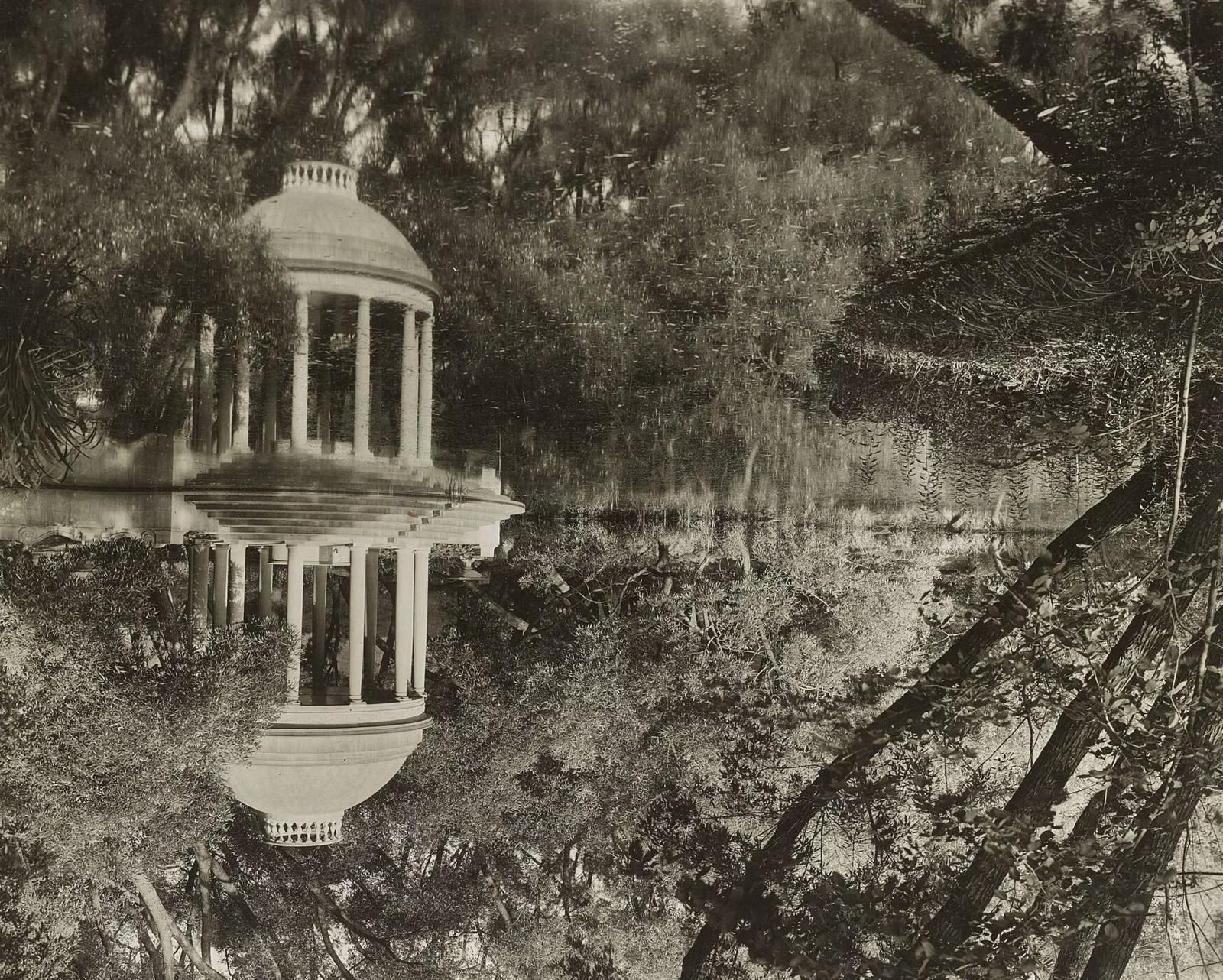
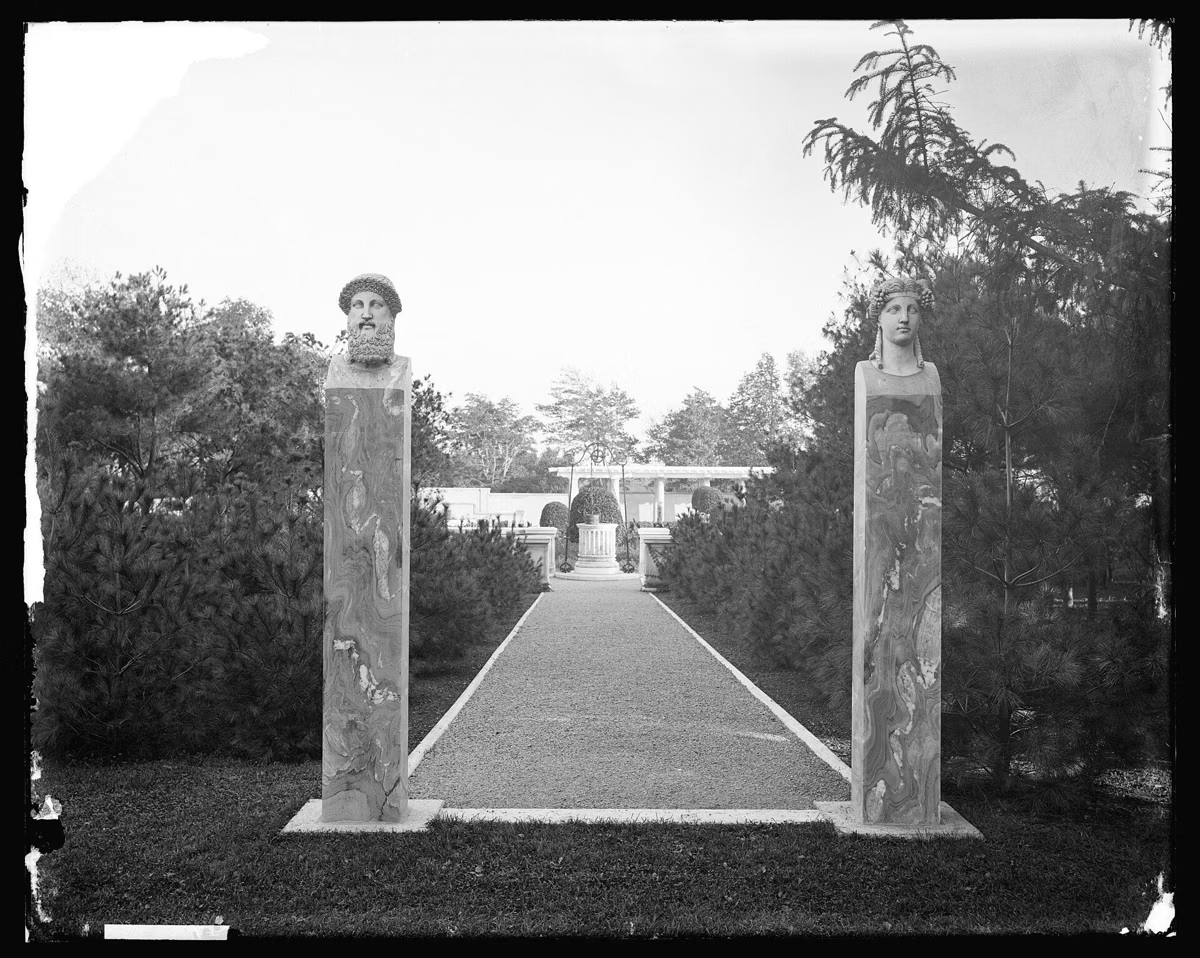
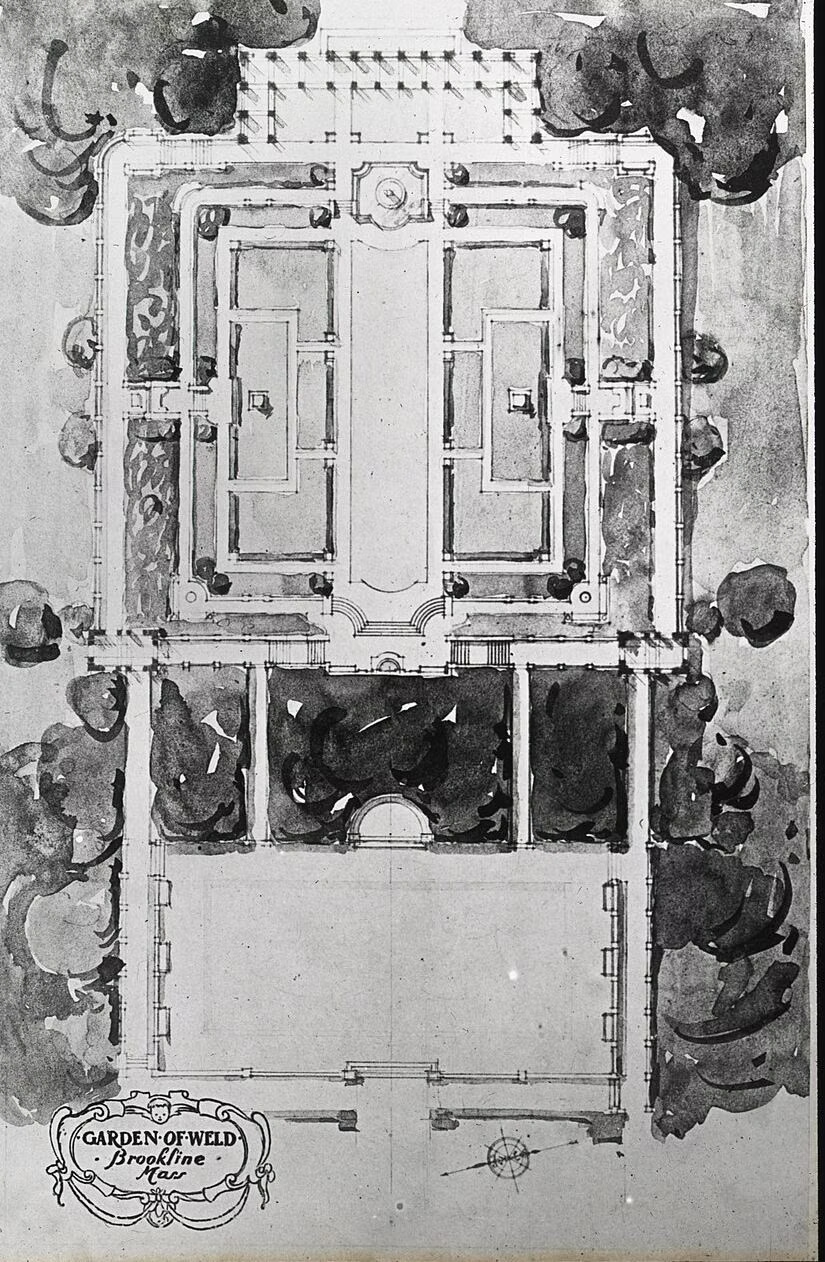
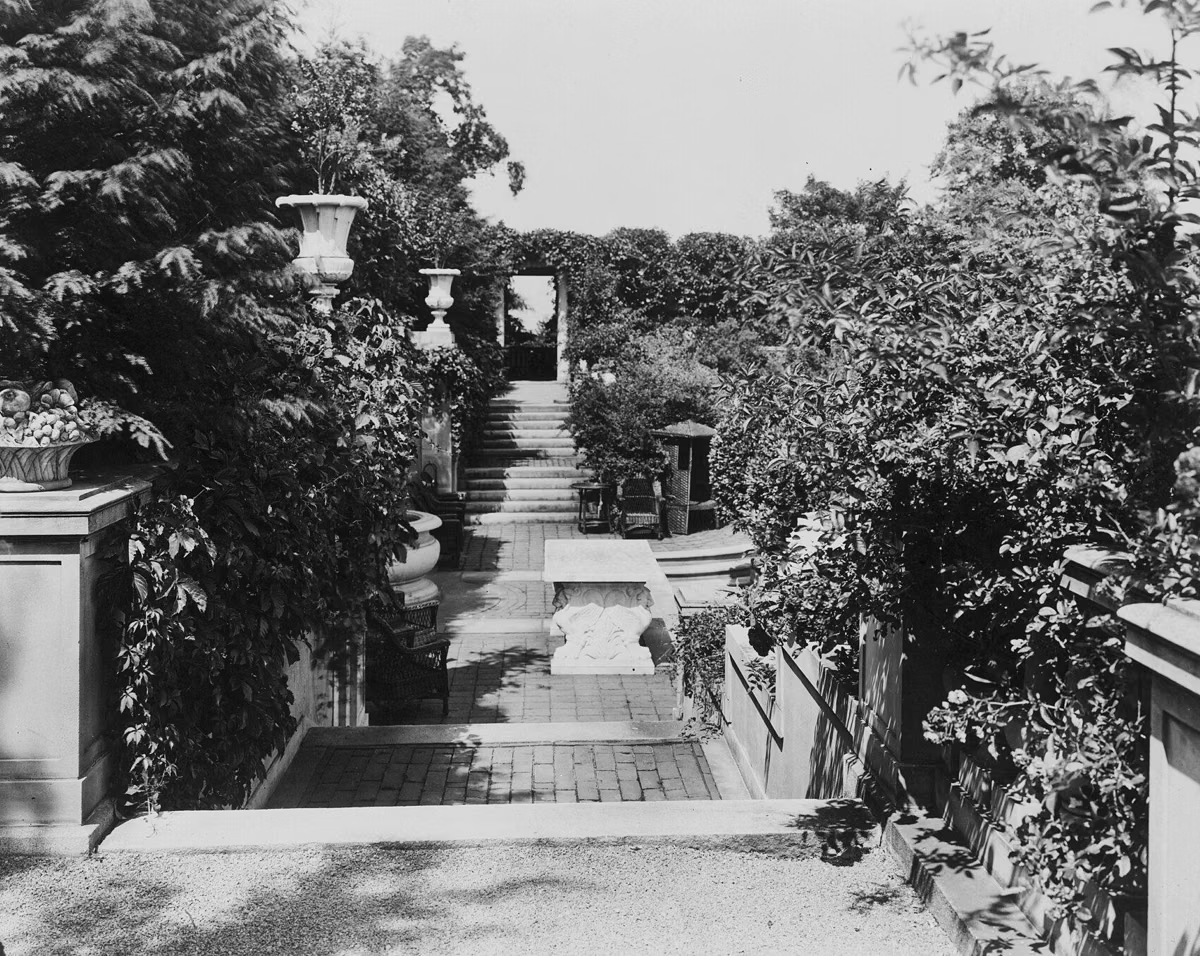
Isabel Weld Anderson and her husband, Larz Anderson, took over the property and, in the Town's words, transformed it into one of the showcases of New England. They called it Weld. Library of Congress photographs from about 1913 and 1914 record its formal gardens at 151 Newton Street: an Italian Garden with a cupid fountain, terraces, wall fountains and stairways; a water garden with a temple at the end of a willow alley; and a hand-drawn garden plan. The Town's later landscape surveys also name a Japanese Garden, a Chinese Garden (of which the Lionhead Fountain survives), a pinetum and an allée of trees ending in stone benches.
The Andersons were also early motorists. The auto museum says their collection began with an 1899 Winton runabout and grew to 32 motorcars and horse-drawn carriages, kept in the estate's Carriage House, and that the family opened the Carriage House doors on Sunday afternoons so the public could see the cars. That habit became the museum's lawn events, held there since 1927. See the auto museum and lawn events.
A Gift to Brookline
Isabel Anderson bequeathed the main part of the estate to the town. The Town's report for that year noted that the plants in the estate's greenhouses were set out in Brookline's parks, squares and around public buildings. After Isabel Anderson's death in 1948, the car collection was entrusted to the VMCCA, which led to today's museum. The Town's park record lists the land as given in 1951 for public recreation, charitable purposes or public education, and the Town lists the property's protection as Article 97.
The House Comes Down, the Rink Goes In
The mansion stood empty, and in 1955 the Town tore it down. It also removed the Italian Garden to make room for a skating rink, which has been in operation since 1958. In 2010 the Larz Anderson Skating Pavilion was renamed the Jack Kirrane Ice Skating Rink, after a lifelong Brookline resident who played on the 1948 and 1960 U.S. Olympic hockey teams and won gold in 1960. The house site at the top of the hill is now open lawn with a skyline view, and the walls of the old Italianate Garden still stand around the ice. See ice skating.
Protecting What's Left
The park is individually listed on the National and State Registers of Historic Places, and a 1998 Massachusetts Historic Commission preservation restriction covers the top of the hill. The Town has been restoring the landscape in phases under a master plan, as Town, private and grant money allows. With a state self-help grant it has been stabilizing the landscape and the gazebo and renovating the playground. In 2021–22 it rebuilt the lagoon's Temple of Love, causeway and footbridge from the ground up (the lagoon). In 2023–24 it rebuilt the park road from Newton Street to Avon Street. Since Town Meeting funded the work in 2025, it has been designing a new rink and warming hut that respect the historic garden walls, and its master plan also covers paths, bridges, lighting, drainage, the comfort station, woodland and meadow restoration and, if funded, a perimeter loop path.
The Park Today
Today Larz Anderson Park is a working Town park. Besides the museum and rink, it has playing fields, a playground, a picnic shelter and more than 80 community garden plots run by Brookline Recreation, and the Town's Parks division keeps its maintenance yard here. The Town's map of the grounds still names the estate's outbuildings — the Coachman's House, the Carpenter's House, the Tenement House, the Widow Harris House, the Bay Shed and the Putterham School. Plan a visit with our visitor guide or the park map.
Park History FAQ
Who was Larz Anderson Park named after?
Larz Anderson, who with his wife Isabel Weld Perkins Anderson, owned the estate. Isabel Anderson left it to the Town of Brookline.
What happened to the Larz Anderson mansion?
It stood empty after the estate went to the town, and the Town tore it down in 1955. The site at the top of the hill is now open lawn with a view of Boston.
Is Larz Anderson Park historic?
Yes. It is listed on the National and State Registers of Historic Places, and a 1998 Massachusetts Historic Commission preservation restriction covers the top of the hill.
What was the Larz Anderson estate called?
The Andersons called it Weld. William Fletcher Weld, who assembled the land between 1841 and 1881, had called it Windy Top.